Of course I love this poem (Yusef Komunyakaa).

Woman, I Got the Blues

I’m sporting a floppy existential sky-blue hat
when we meet in the Museum of Modern Art.

Later, we hold each other
with a gentleness that would crack open
ripe fruit. Then we slow-drag
to Little Willie John, we bebop
to Bird LPs, bloodfunk, lungs paraphrased
till we break each other’s fall.
For us there’s no reason the scorpion
has to become our faith healer.

Sweet Mercy, I worship
the curvature of your ass.
I build an altar in my head.
I kiss your breasts & forget my name.

Woman, I got the blues.
Our shadow on floral wallpaper
struggle with cold-blooded mythologies.
But there’s a stillness in us
like the tip of a magenta mountain.
Half-naked on the living-room floor;
the moon falling through the window
on you like a rapist.

Your breath’s a dewy flower stalk
leaning into sweaty air.



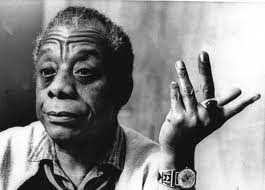
Literary love (Baldwin).

I’m in the middle of my fourth reading of Giovanni’s Room–the third reading this year. I don’t think there’s much left for me to underline, but I’m sure I’ll find a way.

“People who believe that they are strong-willed and the masters of their destiny can only continue to believe this by becoming specialists in self-deception. Their decisions are not really decisions at all—a real decision makes one humble, one knows that it is at the mercy of more things than can be named—but elaborate systems of evasion, of illusion, designed to make themselves and the world appear to be what they and the world are not.”

A song is a poem (and not just because of lyrics).

Just when I thought I’d finally gotten over this song…I’m presented with a new reason to love it.

Chelsea Hotel No. 2 by Leonard Cohen

I remember you well in the Chelsea Hotel,
you were talking so brave and so sweet,
giving me head on the unmade bed,
while the limousines wait in the street.
Those were the reasons and that was New York,
we were running for the money and the flesh.
And that was called love for the workers in song
probably still is for those of them left.
Ah but you got away, didn’t you babe,
you just turned your back on the crowd,
you got away, I never once heard you say,
I need you, I don’t need you,
I need you, I don’t need you
and all of that jiving around.

I remember you well in the Chelsea Hotel
you were famous, your heart was a legend.
You told me again you preferred handsome men
but for me you would make an exception.
And clenching your fist for the ones like us
who are oppressed by the figures of beauty,
you fixed yourself, you said, “Well never mind,
we are ugly but we have the music.”

I don’t mean to suggest that I loved you the best,
I can’t keep track of each fallen robin.
I remember you well in the Chelsea Hotel,
that’s all, I don’t even think of you that often.

Sonnet I carried around today (William Meredith).

The Illiterate

Touching your goodness, I am like a man
Who turns a letter over in his hand
And you might think that this was because the hand
Was unfamiliar but, truth is, the man
Has never had a letter from anyone;
And now he is both afraid of what it means
And ashamed because he has no other means
To find out what it says than to ask someone.

His uncle could have left the farm to him,
Or his parents died before he sent them word,
Or the dark girl changed and want him for beloved.
Afraid and letter-proud, he keeps it with him.
What would you call his feeling for the words
that keep him rich and orphaned and beloved?

1958


There’s no perfect rhyme for Valentine (mine).

I love a man, a plan, a canal, Canada.
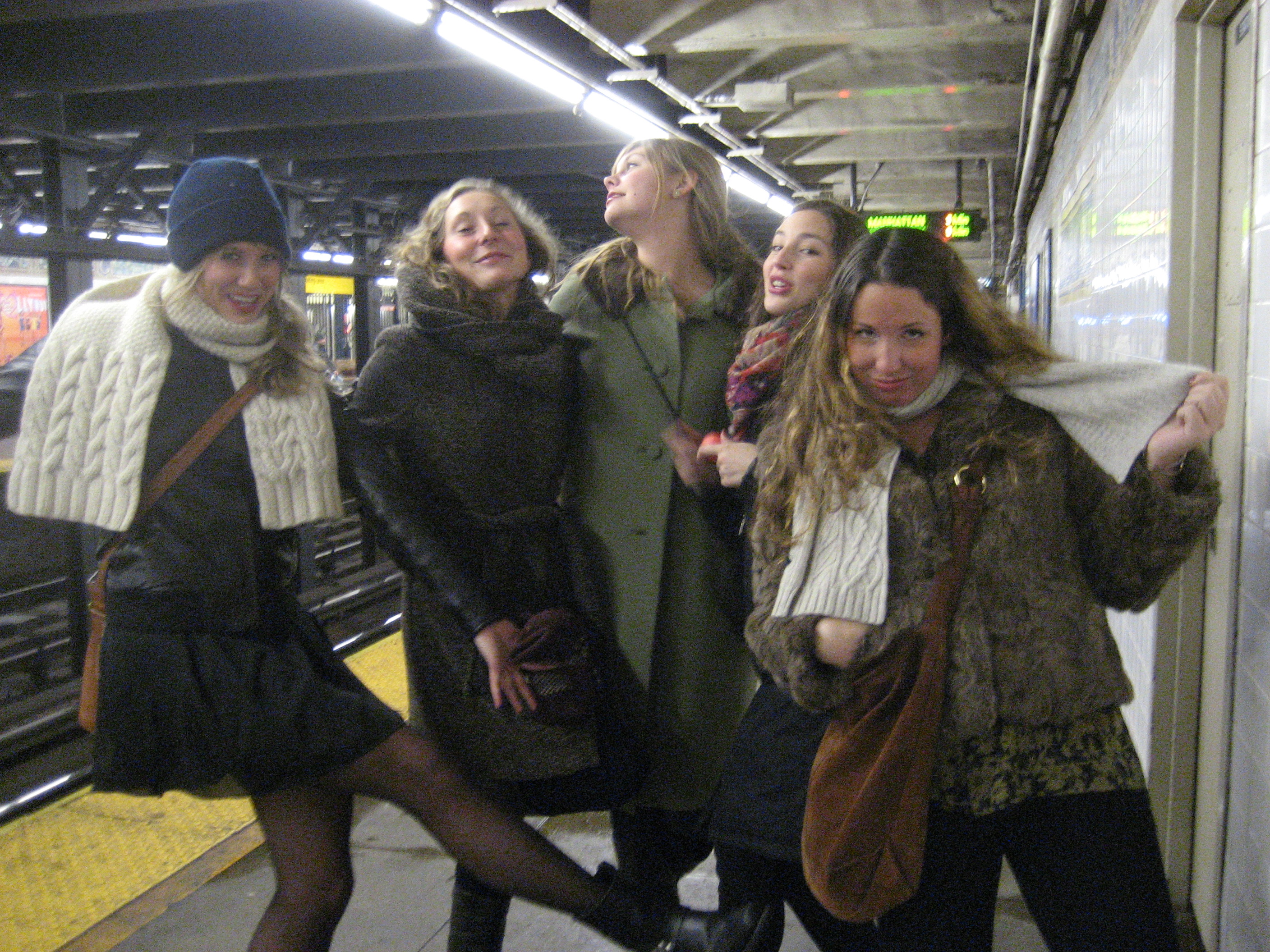
I love various women in black tights in Brooklyn, NY.
I love a cat, and a dog named Satchel.
I love a woman wrapped in florals.
I love an author and her drawings.
I love concentric circles and the shapes of toes.
I love a plant’s refusal.
I love a man in only socks.
I love a map on the wall and its tacks.
I love Eloise, a bird I know.
I love the squeeze of heels and walking slow.
I love an employee of our government.
I love the giving of a blanket.
I love hot pink and rolling.
I love a man in Nike sneaks.
I’d love a doctor in the family.
To love a train conductor is, for me, a natural act.
I love in pairs of two and seven, of four and eight, of six.
I love a taller sister.
I love the postman in his sturdy hat.
I love a man named Ed on Robinson.
I love a poet lost.
I love a farther toss than I can throw.
I love a lengthy gait.
I love a saucer as a plate, a teacup for a bowl.
I love the class of ’78.
I love many chickens and various goats.
I love on a swift diagonal and often with a pen.
I love three men I’ll never meet.
I love the summer’s slicing heat and those I’ve found in August.
I love a mother and a dad.
I love a flannel dyed to plaid.
I love the witches and the Wiccans and the West.
I love three meats I’ll never test.
I love the sound of words more than what they mean.
I love a vestibule, a room for shoes, a coffee paid in quarters.
I love a midget and a mouse.
I love the characters in books.
I love a shameful act of bathroom talk at 10pm.
I love a Christmas day.
I love a solid mound of clay.
I love instructions from the ground.
I love all Katzes, near and far.
I love the cheeses that I know, and the tallgirl at the bar.
I love the French, the Portuguese, the Italian and the Danes.
I love a three pack of girly-patterned Hanes.
I love the flowers in the pitcher and three kisses on the cheek.
I love a meek and puddled world, a squirrel, and a moat.
I love a bruise begotten in the rain.
I love the smell of toast and all the skills a man can boast about.
I love a month from which the country flees; I love mosquitoes dressed as bees, and sweeping up the kitchen mess, and dressing for the day, and all the boys and girls at school, and staying dry, and fish that’s fried, and all the ways we pry and prod and pinch, and the inches that we gain, and the  points amassed along the way, and all the ways to say it.

“The Wild Party” (Joseph Moncure March).

“The Wild Party” by Joseph Moncure March

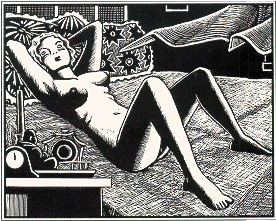
Misha, in all of his wisdom, gave me a classily bound and rare (#434 out of 2,000) edition of this book for the holidays. Its pages are thick, and uneven at the edges. The author uses colons shamelessly, and well. Art Spiegelman (illustrator, author of “Maus”) rediscovered this book years ago and illustrated a new version of it (that’s where the picture above comes from). Here’s a tiny taste of the roaring twenties romp that lies between the covers (a party based on this book will undoubtedly occur at my house in the near future):

9

Some love is fire: some love is rust:
But the fiercest, cleanest love is lust.
And their lust was tremendous. It had the feel
Of hammers clanging; and stone; and steel:
And torches of the savage, roaring kind
That rip through iron, and strike men blind:
Of long trains crashing through caverns under
Grey tumbling streets, like angry thunder:
Of engines throbbing; and hoarse steam spouting;
And feet tramping; and great crows shouting.
A lust so savage, they could have wrenched
The flesh from bone, and not have blenched.

Poem that takes place in Poland (Adam Zagajewski).

Evening, Stary Sacz

The sun sets behind the market square, and nettles reflect
the small town’s imperfections. Teapots whistle in the houses,
like many trains departing simultaneously.
Bonfires flame on meadows and their long sighs
weave above the trees like drifting kites.
The last pilgrims return from church uncertainly.
TV sets awaken, and instantly know all,
like the demons of Alexandria with swindlers’ swarthy faces.
Knives descend on bread, on sausage, on wood, on offerings.
The sky grows darker; angels used to hide there,
but now it’s just a police sergeant on his departed motorcycle.
Rain falls, the cobbled streets grow black.
Little abysses open between the stones.